
Determine applicability
Map obligations to each entity, establishment, state and employee group.
Employer obligations depend on entity structure, establishments, states, workforce and current law. This guide explains how to organize payroll-related compliance work; it does not replace advice from qualified legal, tax or payroll professionals.
Map obligations to each entity, establishment, state and employee group.
Name who monitors, calculates, reviews, files and retains evidence.
Apply new rules with effective dates, validation and documented approval.
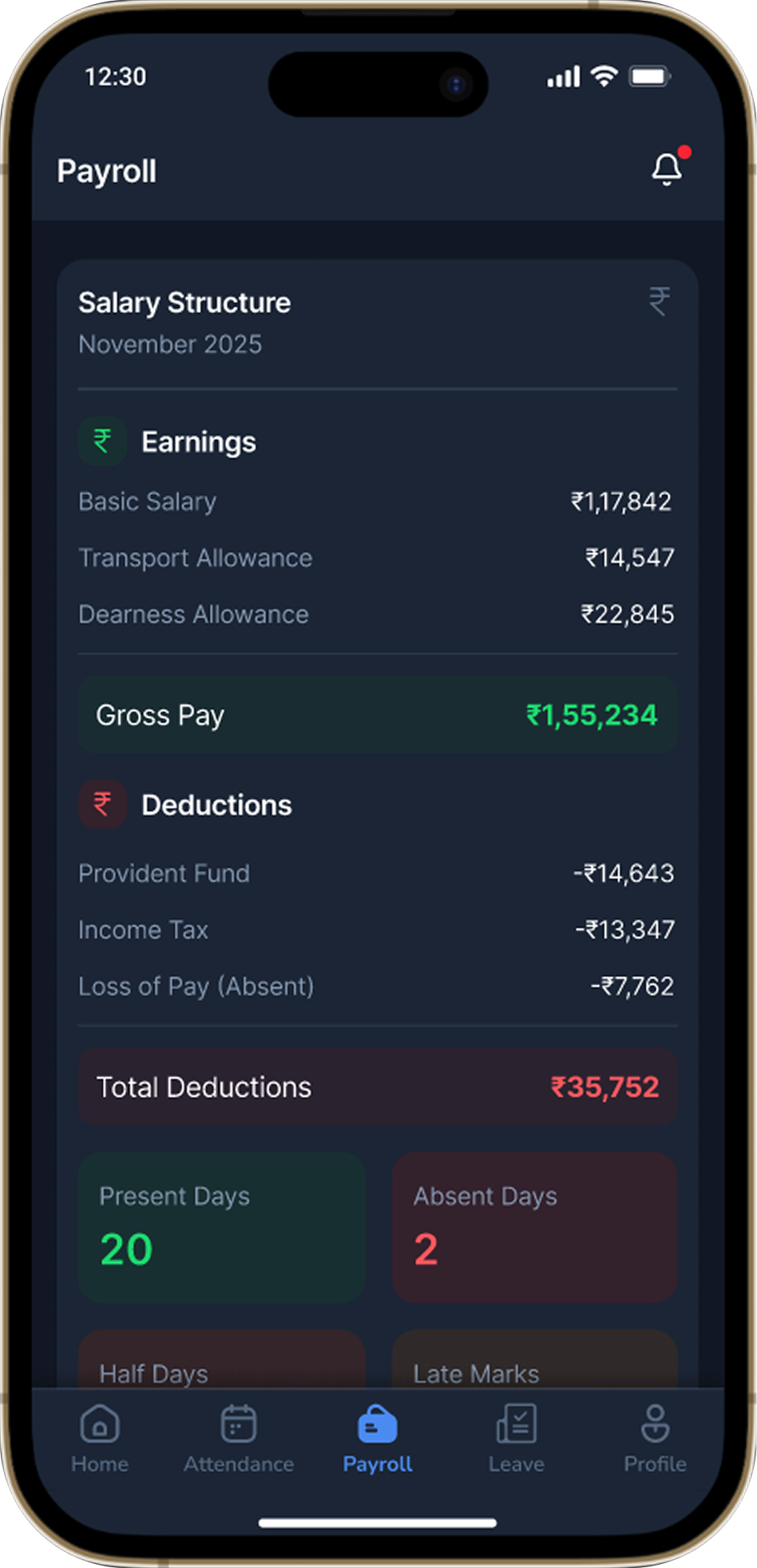
Operational evidence
A payroll interface can expose results and supporting context, but applicability, filing and payment remain accountable employer processes.
01
Start with the legal employer, establishments, work locations, registrations, employee categories and payroll calendar. Record which obligation applies, the basis for that conclusion, the owner and the source that must be monitored for changes.
02
PF and ESI require correct eligibility, employee identifiers, wage inputs, contribution configuration, records and filing operations where applicable. Treat registration, calculation, review and remittance as connected but separately owned steps.
03
Professional Tax and Labour Welfare Fund obligations vary by state and can differ in coverage, frequency and process. Maintain state-specific rules with effective dates and do not reuse a single national assumption across all locations.
04
Salary tax workflows depend on employee tax choices, declarations, proof review where used, projected income, deductions and payroll history. Employees need understandable outputs, while payroll teams need traceability from input to deduction.
05
Mid-year joiners, transfers, salary revisions, arrears and exits create compliance-sensitive changes. Record effective dates, prior payroll context, recoveries, gratuity or leave outcomes where applicable and the approvals behind final settlement.
06
Regulations, thresholds, forms and portals can change. Assign people to monitor authoritative sources, assess applicability, update the payroll configuration, test representative employees, approve deployment and retain a change record.
07
Software can centralize data, apply configured rules, flag missing inputs and retain reports. It cannot decide ambiguous legal applicability, guarantee that source data is correct or replace the employer’s responsibility for review, filing and payment.
Decision framework
Software supports compliance only when authoritative rules, effective-dated configuration, accountable review and retained evidence operate together.
| Obligation area | Primary authority | System evidence | Accountable owner |
|---|---|---|---|
| Provident fund | EPFO and applicable legislation or notifications. | Eligibility, identifiers, wage inputs, calculation review, reports and filing evidence. | Payroll or compliance owner with authorized professional advice where needed. |
| Employees’ State Insurance | ESIC and applicable legislation or notifications. | Coverage, identifiers, wage inputs, contributions, reports and remittance evidence. | Payroll or compliance owner. |
| Professional Tax and LWF | Relevant state authorities. | State mapping, effective-dated rules, deductions, reports and payment evidence. | State-aware payroll or compliance owner. |
| Salary TDS | Income Tax Department and applicable legislation. | Tax regime, declarations, projected income, deductions, review and employee documents. | Payroll and tax owner. |
| Rule change | The authority responsible for the changed requirement. | Source link, impact assessment, test cases, approval, effective date and deployment record. | Named change owner with reviewer separation. |
This matrix is operational guidance, not legal or tax advice. Applicability, thresholds, due dates and forms can change and should be confirmed with official authorities and qualified professionals.
Verification trail
We prefer primary government publications and official vendor documentation. Links are provided so buyers can verify time-sensitive requirements and product claims directly.
Read our editorial standardsEmployees’ Provident Fund Organisation
Official overview of EPF, EPS and EDLI administration. Use current EPFO publications for operational rules and changes.
Employees’ State Insurance Corporation
Primary ESIC publication covering the statutory framework, including employer and employee contributions.
Income Tax Department
Official, time-sensitive guidance for salary TDS and the transition to the Income Tax Act, 2025.
Ministry of Electronics and Information Technology
Primary legislation relevant to evaluating the handling of digital personal data. Applicability and commencement should be confirmed with qualified advisers.
Clear answers to common evaluation, implementation and operating questions.
It is the set of employer obligations that may apply to payroll and employment operations, based on the entity, establishment, state, workforce and current law.
No universal answer applies. Eligibility and obligations depend on current law, registrations, wages, location and other facts. Confirm them with qualified advisers and authoritative sources.
No. It can support configured calculations, controls, records and change management. The employer remains responsible for applicability, accurate inputs, review, filings and payments.
Assign ongoing monitoring and review rules whenever an authoritative notification or organizational change could affect applicability or calculation.
No. It is an operating framework. Confirm current obligations with qualified legal, tax and payroll professionals and the relevant official authorities.
Continue evaluating